Showing posts with label soft drink. Show all posts

Saturday, October 11, 2025

The Evolution of Soft Drinks: From Ancient Mineral Waters to Modern Sodas

It could be argued that Hippocrates, the ancient Greek physician often regarded as the father of medicine, planted the first seeds of the modern soft drinks industry when he suggested that mineral waters might have health benefits. In ancient Greece and Rome, however, mineral waters were primarily used for bathing and relaxation rather than drinking. The idea that such waters could be bottled and consumed for health would not emerge until many centuries later.

The term “soda water” first appeared in 1798, marking the beginning of what would become a massive global industry. In 1810, the first patent for imitation mineral water was issued, allowing the production of artificially carbonated beverages that imitated naturally sparkling spring water. These early drinks were marketed as “health tonics” throughout the 19th century and were often sold in pharmacies, where they were believed to aid digestion and boost vitality.

By the 1830s, pharmacists began experimenting with new flavorings—using herbs, barks, and flowers—to improve the taste and purported benefits of these beverages. This innovation led to the birth of flavored sodas such as ginger ale, lemon soda, and root beer. Root beer became commercially available in 1876, followed by cola in 1881. The late 19th century also saw the creation of iconic brands that still dominate the market today: Dr. Pepper in 1885, Coca-Cola in 1886, and Pepsi-Cola in 1898.

By the early 1920s, soft drinks were available in convenient six-packs for home consumption and from the first automatic vending machines. These developments helped cement their place in modern life.

Consumption soared throughout the 20th century. Between 1970 and 1997, U.S. production of sweetened soft drinks nearly doubled—from 22.2 to 41.4 gallons per person per year—while diet soda production rose from 2.1 to 11.6 gallons. Combined, that amounts to roughly 566 cans per person annually.

From ancient mineral springs to global beverage giants, the story of soft drinks reflects centuries of innovation, marketing, and changing consumer tastes—transforming what began as a medicinal curiosity into one of the world’s most popular refreshments.
The Evolution of Soft Drinks: From Ancient Mineral Waters to Modern Sodas

Sunday, January 19, 2025

The Evolution of Soft Drink Vending Machines: A Journey of Convenience and Innovation

The history of soft drinks in vending machines in the United States is a fascinating journey that mirrors the evolution of consumer convenience and technological innovation. While the concept of vending machines dates back to ancient Greece, where devices dispensed holy water in exchange for coins, it was not until the early 20th century that vending machines became a fixture in American life. The first modern vending machines in the United States, introduced in the 1920s, primarily offered postcards and gum. However, the advent of soft drink vending machines in the 1930s revolutionized both the vending industry and beverage consumption.

These early machines were mechanically operated, requiring users to insert a coin and pull a lever to release a glass bottle of soda. Despite their simplicity, they represented a breakthrough in convenience. The 1940s and 1950s marked a turning point, as electric vending machines capable of refrigeration emerged, ensuring that beverages were served cold. This innovation coincided with the rising popularity of iconic brands such as Coca-Cola and Pepsi, which capitalized on the vending machine's reach to establish a stronger foothold in consumer markets.

The 1960s and 1970s saw significant advancements, including the introduction of can vending machines and the capability to accept multiple coin denominations. These innovations made vending machines more versatile and user-friendly. Additionally, the expanding variety of soft drink options, including diet sodas and flavored beverages, reflected changing consumer tastes. By the 1980s and 1990s, vending machines had become ubiquitous, appearing in schools, workplaces, hospitals, and public spaces. The introduction of machines capable of dispensing multiple beverage brands from a single unit further enhanced their appeal.

Today, vending machines have evolved to meet the demands of modern consumers. Equipped with touchscreens, cashless payment systems, and even mobile app compatibility, these machines offer unparalleled convenience. Some feature advanced inventory tracking and smart sensors to optimize restocking and maintenance. Moreover, eco-friendly initiatives, such as energy-efficient refrigeration and recyclable packaging, highlight the industry’s commitment to sustainability.

The journey of soft drink vending machines reflects broader societal shifts, from the mechanization of daily life to the digitization of commerce. As technology continues to advance, vending machines remain an enduring symbol of convenience, adapting to meet the evolving needs of American consumers.
The Evolution of Soft Drink Vending Machines: A Journey of Convenience and Innovation

Sunday, May 26, 2024

Evolution of Natural Spring Water Packaging: From Earthenware to Modern Bottles

The consumption and distribution of natural spring water have evolved remarkably since ancient times, reflecting significant technological advancements. Early recognition of the health benefits of natural spring water led to its transportation using available means. One notable practice involved collecting naturally carbonated water into earthenware containers. These containers were sealed with cork and wax to preserve the carbonation, although the efficacy of this method was often limited due to frequent leakage.

The limitations of earthenware bottles, particularly for highly carbonated waters, prompted a shift to glass bottles. Early glass bottles typically featured round bottoms, a design choice intended to ensure the bottles were stored on their sides. This position kept the corks moist, thereby reducing the risk of leakage from drying corks. The manufacturing of glass bottles was initially a skilled, hand-blown process, requiring considerable expertise.

The introduction of semi-automated processes began to change the industry, but the real breakthrough came in 1904 when Michael J. Owens of the USA received a patent for the first automatic glass bottle blowing machine. This innovation revolutionized bottle production, making it more efficient and scalable.

Despite advancements in bottle manufacturing, the high pressure inside carbonated bottles continued to cause leakage. Corks, even when reinforced with wiring, proved inadequate. This led to the development of various sealing mechanisms, which can be broadly categorized into three types. First, wire and rubber sealing devices, popular in the USA until the early 1900s, included both internal spring forms and external swing types. The latter, patented by Charles de Quillfeldt in 1874, remains in use for certain specialty bottles.

Second, variations utilizing internal balls made from rubber, ebonite, or glass were introduced. These balls were held in place by internal pressure. The most successful of these was Hiram Codd’s bottle, widely used in the UK from the 1870s until the 1930s. A similar design by S. Twitchell in 1883 featured a floating rubber ball.

The third category involved internal screw top bottles. Unlike modern bottles, these had threads inside the neck with ebonite or wooden stoppers. Ebonite soon replaced wood due to its moisture resistance, ensuring a better seal. These stoppers were common in the UK until the 1950s.

A major leap in sealing technology came in 1895 when William Painter patented the ‘Crown Cork’, founding the Crown Cork and Seal Company in 1892. Despite initial resistance due to existing investments in returnable bottles and the need for a removal tool, the crown cork gained popularity, especially for small single-serve bottles and beer.

Glass bottles dominated carbonate packaging for over a century until the introduction of cans in the 1960s. This period marked significant advancements in packaging and distribution, paralleling the earlier product development boom of the late nineteenth century. The ongoing innovation in packaging reflects the industry's adaptability and commitment to meeting consumer needs effectively.
Evolution of Natural Spring Water Packaging: From Earthenware to Modern Bottles

Sunday, April 30, 2023

History of soda fountain in United States

In 1798, the term "soda water" is first coined. As the popularity of soda fountains rose so did the technology behind them. Carbonated beverages were first bottled for sale back in 1835, and this is also when people began adding flavoring to their carbonated drinks.

To meet the need for carbonated soft drinks, the soda fountain was developed by a physician named Samuel Fahnestock in the United States in 1819. His invention pumped carbonated water from a pump and spigot. The barrel-shaped body of his device was designed so it could be concealed and hidden under a counter.

Over the course of the 19th century, the early soda fountain got a little more high-tech. The machine invented by John Matthews in 1832 made soda fountains much more cost-effective. As a result, their use spread to individual shops.

Throughout the mid-19th century, various innovations and recipes came along to add flavor. In 1903, the first iceless soda fountain machine was introduced.

Almost every drugstore had a soda fountain by the early 1920's. Due to prohibition, which began in 1919, bars were closing and people needed a place to socialize.

As soda fountains continued to evolve, they worked their way into everything from barbershops to restaurants. In many ways they became an iconic part of American culture and social behaviors.
History of soda fountain in United States

Monday, June 6, 2022

History of Dr Pepper

The soda was the oldest major soft drink brand in the United States. In 1885, in Waco, Texas, a young pharmacist called Charles Alderton invented the soft drink "Dr Pepper". To test his new drink, he first offered it to store owner Wade Morrison. At Morrison’s Old Corner Drug Store, Dr Pepper was served first time on December 1 1885.

They originally called it a "Waco" after the name of their town, but pharmacy owner Wade Morrison sensed they were onto something and wanted to give it a better name. Wade Morrison is credited with naming the drink "Dr Pepper" after a friend of his, Dr. Charles Pepper. Later in the 1950s the period was removed from the "Dr Pepper" name.

When they originally marketed Dr. Pepper, it was almost marketed for medical use with the claim that it could aid digestion and restore vigor and vitality for the user.

Other soda fountain workers in Waco began purchasing the popular syrup from Morrison and Alderton. As the soft drink's popularity grew, Alderton and Morrison had trouble manufacturing enough Dr Pepper to keep up with the demand for the product.

In 1891, Morrison and Lazenby formed the Artesian Manufacturing & Bottling Company, which later became the Dr Pepper Company. Under the direction of Mr. Lazenby Dr Pepper enjoyed steady growth in sales and began to spread in popularity across the country. Later Lazenby and his son in law, J.B O’Hara moved the company from Waco to Dallas in 1923.

Dr Pepper was introduced to United States at the 1904 Louisiana Purchase Exposition as a new cola. In that year, the company introduced Dr Pepper to 20 million people attending the World's Fair Exposition in St. Louis.

The Dr Pepper Company was incorporated in 1923 in Dallas. In 1969, Dr. Pepper made an agreement with Coca-Cola to have them start distributing Dr. Pepper as well as to bottle it. The agreement was specific to the New York metro area at the time.

In the 1980's they merged with Seven Up, Inc. Corporate headquarters for Dr Pepper/Seven Up Inc. remains in Plano, north of Dallas. The Dr Pepper Company is the oldest major manufacturer of soft drink concentrates and syrups in the United States.
History of Dr Pepper

Sunday, December 5, 2021

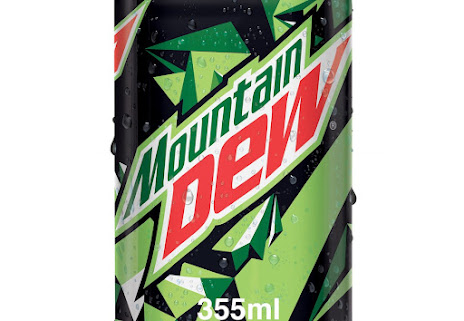
Carbonated soft drink Mountain Dew

Mountain Dew is a caffeinated, sweet, citrus-flavoured soft drink produced by PepsiCo, Inc. The formula was made and first marketed in Marion, VA, Knoxville and Johnson City, Tennessee, USA through the 1940s, then in Fayetteville, North Carolina by Barney and Ally Hartman.

The name Mountain Dew was first trademarked by two brothers, Barney and Ally Hartman, who ran a bottling plant in Knoxville, Tennessee.

Soft drinks were regional in the 1930s, and the Hartmans had difficulty in Knoxville obtaining their preferred soda to mix with liquor, preferably whiskey, so the two men developed their own. Used as a mixer with whisky, it was a far cry from what it has become today, though people still mix it with various alcoholic beverages.

The perfect Mountain Dew taste many know and love today is credited to Bill Bridgforth, who joined the company in 1958. The original bottle was made to look as though it was a bootlegged beverage like those made in mountain stills and was decorated with hillbillies and outhouses, and pseudo-facts like 'Filled by Ed and Gene'.

The Tip Corporation of Marion, Virginia bought the rights to Mountain Dew, revising the flavour and launching it in 1961. In 1964, PepsiCo purchased the Tip Corporation, then Mountain Dew’s appeal became nationwide.

It has been introduced globally at various stages, but the USA remains its stronghold. The days of outhouses and hillbillies are past: the target audience is now different. Current Mountain Dew's commercials appeal to fun-seeking, wild, outdoorsy teenagers making Mountain Dew one of the popular soft drinks in America.

Between the 1940s and 1980s, there was just one variety of Mountain Dew, which was citrus-flavored and caffeinated in most markets.

Diet Mountain Dew was introduced in 1988, followed by Mountain Dew Red, which was introduced and subsequently discontinued in 1988. In 2001, a cherry flavor called CodeRed debuted. As of 2007, Mountain Dew was the fourth-best-selling carbonated soft drink in the United States, behind only Coca-Cola Classic, Pepsi-Cola, and Diet Coke.
Carbonated soft drink Mountain Dew

Sunday, September 12, 2021

Weber's Root Beer and Hamburger

Way back in 1891, Oscar Weber Bilby started making his own root beer on his farm in Tulsa, Oklahoma. Oscar and his wife Fanny moved to Oklahoma from Missouri to a 640-acre farm just north of Sapulpa to an area now known as Bowden, Oklahoma in 1884.

Oscar was a farmer but he enjoyed experimenting with different soft drink condiments. Through trial and error, he combined roots and barks and some 14 secret ingredients before stored and aged in birch bark barrels. The creation of sweet soda pop was for his family to enjoy.

His famous Weber's Superior Root beer was then served at the peak of the flavoring cycle. Oscar used yeast to carbonate his root beer. The syrup concentrate for the root beer is made from scratch in a 55-gallon drum every few days. One gallon of concentrate is then made into a 30-gallon barrel of root beer syrup. From the 30 gallons of syrup, about 300 gallons of root beer is produced.

Weber’s Root Beer is still made entirely by hand in Tulsa by the keeper of the secret recipe. That recipe for Web's root beer has been passed from generation to generation.

On the fourth of July, 1891, Oscar probably made his most significant contribution to society when the first real hamburger was made in his home. He then served them (along with Weber's Superior Root beer) to more than 100 people who were the Bilbys' friends and family. Oscar continued this 4th of July tradition every year for the rest of his life.

His hamburgers and root beer were the hit of the community. Decades of encouragement later, Oscar’s son, Leo Bilby actually started the root beer company back in 1933, selling it from a drive-through window in Tulsa's Brookside district and the tradition was continued by Harold Bilby.
Weber's Root Beer and Hamburger

Sunday, July 17, 2016

History of Pepsi-Cola

In 1892, Caleb Davis Bradham opened a drug store called Bradham’s Pharmacy. He founded it as a fun to mix delicious a soft drink as it was to make medicines. His soda fountain grew popular as townspeople gathered to socialize.

In 1893, Bradham combined sugar, caramel coloring, rare oils and extracts a fruit juices. This created a syrup. The syrup would be mixed with carbonated water to make a soft drink. The name ‘Brad’s Drink’ didn’t convey the nature of the beverage and he decided to name it ‘Pepsi-Cola’.

In 1898, Bradham wisely bought the trade name ‘Pep Cola’ for $100 from a competitor from Newark, New Jersey that had gone broke.

Bradham filed incorporation paper for Pepsi-Cola Company with the state of North Carolina in 1902. A year later, the US patent Office granted Pepsi-Cola a trademark. By then, Bradham had decided that he needed to move his operation to a larger building.

At first Bradham mixed his own syrup, which was sold only through soda fountains, but he soon realized a greater market was to be had in bottling Pepsi, which people could drink and transport anywhere.

Pepsi-Cola went bankrupt in 1923 due to fluctuations of sugar price. In 1931, Pepsi-Cola was bought by the Loft Candy Company.
History of Pepsi-Cola

Tuesday, March 8, 2016

Charles G. Guth and Pepsi Cola Company

In 1902 Caleb Bradham incorporated the Pepsi-Cola Company and started a manufacturing operation.

The company was certified bankrupt on 1923. It wasn't until a successful candy manufacturer, Charles G. Guth, appeared on the scene that the future of Pepsi-Cola was assured.

Guth was president of Loft Incorporated, a large chain of candy stores and soda fountains along the eastern seaboard. At the time Charles Guth became Loft’ president, Guth and his family owned Grace Company, which made syrups for soft drinks in a plant in Baltimore, Maryland. Coca-Cola Company supplied Loft with cola syrup.

Loft operated over 130 soda fountains in the greater New York area. Guth believed that with that kind of volume, Loft deserved better pricing. Coca-Cola believed that Guth had no choice but to buy their syrup, and refused to offer any discount.

He saw Pepsi-Cola as an opportunity to discontinue an unsatisfactory business relationship with the Coca-Cola Company, and at the same time to add an attractive drawing card to Loft's soda fountains.

Guth entered into an agreement with Roy Megargel to acquire the trademark of Pepsi and its formula and form Pepsi-Cola Corporation.

With just handful of bottles in 1934, the number grew to 315 Pepsi-Cola bottlers in 1939.

He later was sued by his partner and claimed that Guth had misused corporate assets and that his Pepsi stock should be handed over to Loft.

Loft filed a suit in a Delaware state court against Guth, Grace and Pepsi, seeking their Pepsi stock and accounting. After nearly three years of legal procedures, the court ruled that Guth, Pepsi-Cola holding belonged to Loft. Loft became a Loft subsidiary and Walter Mack was chosen to be Pepsi’s new President and Guth continuing as general manager.

After five owners and 15 unprofitable years, Pepsi-Cola was once again a thriving national brand.
Charles G. Guth and Pepsi Cola Company

Popular Posts

Selected articles